Watch a 3-year-old for about 45 seconds and you will understand something fundamental about who they are: they are in motion. Constant, purposeful, joyful, sometimes chaotic motion.
That little person is not misbehaving. They are not restless. They are not failing to sit still.
They are learning.
Movement at age 3 is not a break from development — it is development. And at Sorella Early Learning in Griffin, we build our programs for 3-year-olds around this truth with genuine conviction.
Our Senior Toddlers (2–3 years) and Pre Kindy (3–4 years) rooms are intentionally designed to honour, celebrate, and purposefully develop the movement capabilities of every child. Here is why it matters so deeply — and the seven movement activities that our educators love most.
Why Movement Is the Foundation of Everything
The relationship between physical movement and child development runs deeper than most parents realise. Far deeper than fitness.
A 2024 meta-analysis published in Frontiers in Public Health confirmed that motor-development-focused activities in preschool-aged children (3–5 years) produce significantly better gross motor outcomes than unstructured activity alone — and that early gross motor competence is linked to physical health, psychosocial wellbeing, cognitive development, and academic achievement.
Closer to home, the Australian Government’s 24-Hour Movement Guidelines for children aged 3–5 years recommend at least three hours of physical activity per day, with at least one hour of energetic play — not because activity is good for children in the abstract, but because movement is how the 3-year-old brain builds its architecture.
When a child jumps, their vestibular system develops. When they climb, their core strengthens and their spatial reasoning grows. When they dance, bilateral coordination develops — the same left-right brain integration that later supports reading. When they balance, concentration deepens. When they run and stop and run again, they are practising impulse regulation — one of the cornerstones of school readiness.
At Sorella, we do not tolerate movement in spite of learning. We celebrate it because of learning.
Our 7 Favourite Movement Activities for 3-Year-Olds
🎵 1. Music and Dance: Moving to the Beat
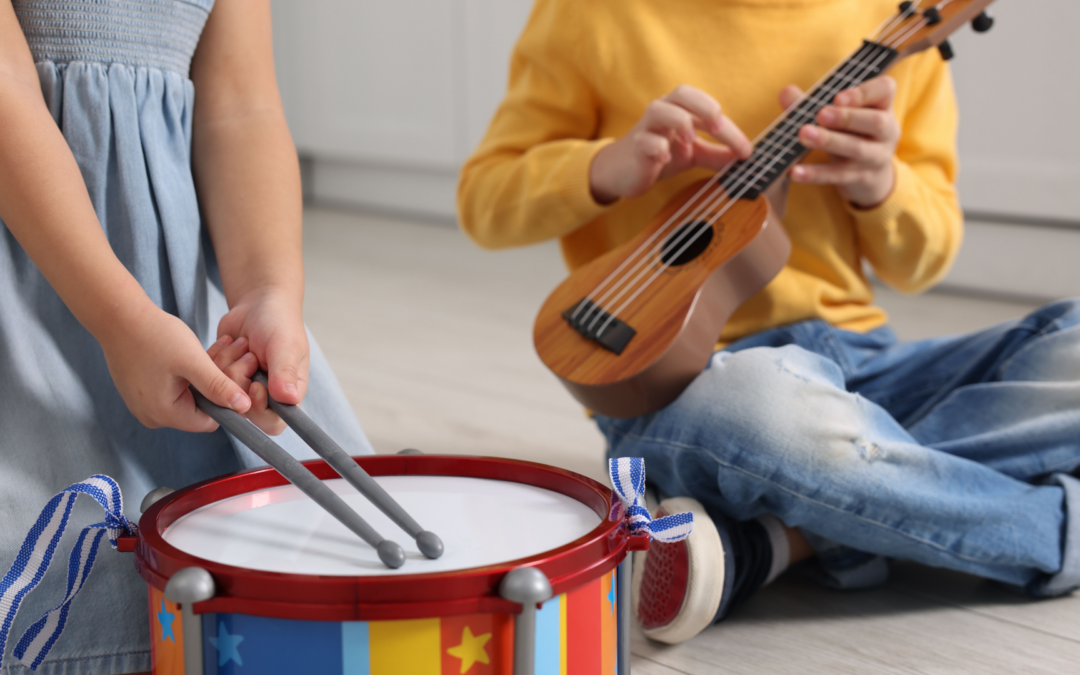
Our Music Melodies program within the Sorella Seedlings Life Skills initiative is one of the most joyfully anticipated parts of the week in our Senior Toddlers and Pre Kindy rooms — and it is doing far more than children realise.
Dancing and moving to music develops bilateral coordination (using both sides of the body together), rhythm (the timing of movement), spatial awareness (understanding the body in space), and emotional expression (moving how you feel). Research shows that cross-lateral movement — crossing the midline of the body, as children do when they reach across to the opposite side — actively supports brain hemisphere integration and is a genuine developmental precursor to reading readiness.
At Sorella, music and movement is not a set activity that happens once a week and stops. It ripples through the whole day — a song at transition time, a spontaneous dance in response to something exciting, a percussion instrument on the table and an open invitation.
What children are building: bilateral coordination, rhythm, spatial awareness, emotional regulation, vestibular development, language (songs expand vocabulary beautifully)
🧘 2. Yoga and Mindful Movement
Our Mindful Moments program — developed through our partnership with the Resilience Project, with a focus on gratitude, empathy, mindfulness, and emotional literacy — includes weekly yoga sessions for our toddlers through to Pre Kindy children.
Yoga with 3-year-olds looks nothing like adult yoga. It looks like a child imitating a tree, wobbling, falling over laughing, and trying again. It looks like a child learning to take a deep breath when they feel overwhelmed. It looks like a child discovering that their body can be still — and that stillness feels good.
For children who are in constant motion, yoga provides a counterbalance: the experience of intentional, calm, focused physical engagement. This supports body awareness (proprioception), balance and core strength, attention regulation, and the emotional vocabulary that comes from naming body sensations.
What children are building: balance, core strength, proprioception, breath awareness, emotional regulation, attention, flexibility
🏃 3. Obstacle Courses: The Ultimate Whole-Body Challenge
There is perhaps no single activity that delivers more developmental value per minute for a 3-year-old than a well-designed obstacle course — and our purpose-built indoor and outdoor spaces at Sorella are perfect for exactly this.
An obstacle course might involve: crawling through a tunnel, jumping over cushions, balancing along a beam, throwing a ball into a basket, spinning around a cone, and leaping onto a crash mat. Every element targets a different aspect of gross motor development. Together, they create a full-body challenge that engages the brain as deeply as it engages the muscles.
Importantly, obstacle courses also build problem-solving (how do I get through this?), persistence (trying again when it is tricky), sequencing (what comes next?), and body regulation (managing energy and excitement). These are not just physical skills — they are the foundations of learning.
What children are building: gross motor skills across all categories (locomotion, balance, object control), problem-solving, sequencing, persistence, body regulation
🌿 4. Nature Navigation and Outdoor Exploration
Our Nature Navigators program takes 3-year-olds into the natural environment for guided discovery, scavenger hunts, and hands-on outdoor exploration — and the movement embedded in these experiences is rich and varied in ways that no indoor gym session can replicate.
Natural environments are inherently uneven. They have slopes, textures, unexpected surfaces, and living things that require care and attention. Walking on grass, navigating garden beds, crouching to look at an insect, stretching to reach a branch — these micro-movements develop the proprioceptive and vestibular systems in ways that flat, predictable surfaces simply cannot.
The Australian Institute of Family Studies and the Australian Government’s early childhood guidelines both emphasise that time in natural, outdoor environments supports developmental outcomes well beyond physical health — including cognitive curiosity, emotional regulation, and social connection. For our 3-year-olds, the garden is not a break from learning. It is among the most sophisticated learning environments we offer.
What children are building: proprioception, vestibular development, gross and fine motor skills, sensory processing, environmental connection, curiosity
🎯 5. Throwing, Catching and Ball Play
Object control skills — throwing, catching, kicking, rolling — are a distinct and critical category of gross motor development, and they are among the skills most commonly underdeveloped in children who miss out on intentional early movement experiences.
Research from Australian preschool intervention studies shows that focused attention on object control skills in the 3–5 year age range produces lasting improvements in movement competence that track well into middle childhood. These are not trivial playground activities. They are foundational physical literacy experiences.
At Sorella, ball play is woven into our outdoor program in structured and unstructured forms: rolling balls back and forth with a partner (building connection and turn-taking simultaneously), kicking toward simple targets, throwing beanbags into hoops. Even the imprecision is useful — a missed catch requires the body to adjust, track, and try again, each attempt building neural pathways that underpin coordination.
What children are building: hand-eye coordination, object control, bilateral coordination, spatial awareness, turn-taking, persistence
🎭 6. Dramatic Movement and Role Play
When a 3-year-old stomps around the room pretending to be a dinosaur, gallops like a horse, or tiptoes like a fairy, they are doing something developmentally remarkable: using their imagination to generate varied, full-body movement patterns that their bodies would not otherwise encounter in a typical day.
Dramatic movement is one of the richest intersections between physical development, language development, and social-emotional learning in early childhood. Children must listen, interpret, respond, and express — all through the medium of their moving body.
At Sorella, dramatic play and movement are constant features of our Senior Toddlers and Pre Kindy environments — in both guided group experiences and child-initiated, open-ended play. Our educators are skilled at scaffolding this kind of play without directing it, joining in as willing participants rather than instructors.
What children are building: full-body coordination, spatial awareness, narrative and language skills, emotional expression, social connection, creativity
🧗 7. Climbing, Balancing and Risk-Taking Play
At Sorella Early Learning, we believe in what the research community increasingly calls risky play — and our purpose-built facility in Griffin is designed to offer it safely.
Climbing structures, balance beams, low platforms, and unstable surfaces (a wobble board, a log balance course, stepping stones) give 3-year-olds the opportunity to experience manageable physical challenge — to test their limits, make decisions about their bodies, fall (safely), recover, and try again.
ACECQA’s National Quality Standard explicitly recognises the value of environments that challenge children physically and support appropriate risk-taking as part of quality early childhood practice. Climbing and balancing are not just fun — they are how children develop core strength, vestibular stability, spatial confidence, and critically, self-trust: the belief that their body is capable.
A child who has been allowed to climb, wobble, and recover in a safe environment develops a physical confidence that carries directly into other forms of learning. They know what it feels like to be unsure — and to get through it anyway.
What children are building: core strength, vestibular development, balance, spatial confidence, risk assessment, self-efficacy, gross motor development
Supporting Movement at Home
Movement development does not stop at the end of the childcare day — and the beautiful thing is that supporting it at home requires nothing more than time and a little space.
Turn on music and dance together in the kitchen. Set up a simple living room obstacle course with cushions and pillows. Kick a ball in the backyard. Walk to the park and let your child climb everything safely climbable. Encourage them to carry things, push things, balance on kerbs, and jump in puddles.
Every single one of these activities is building the gross motor foundation that supports not just physical health but the cognitive and emotional readiness your child will carry into their school years and beyond.
The Raising Children Network — Australia’s evidence-based parenting resource — notes that active play is among the most important things parents can offer young children, and that it is most powerful when it is unstructured, outdoors, and genuinely child-led.
Discover Our Senior Toddlers and Pre Kindy Programs
At Sorella Early Learning in Griffin, QLD, our Senior Toddlers (2–3 years) and Pre Kindy (3–4 years) rooms are designed by educators who understand that a child who moves well, learns well — and who love what they do every day.
We would love you to come and see our outdoor spaces, meet our team, and experience the warmth of a centre where play really is the work of childhood.
📞 07 2111 6711
📍 32 Tesch Rd, Griffin QLD 4503
🌐 Book a Tour →
📘 Facebook →
From our family to yours — with love, play, and movement.
Sources: Frontiers in Public Health — Motor development-focused exercise training and gross motor skills in preschool children (Wang & Zhou, 2024); Australian Government 24-Hour Movement Guidelines for Children aged 3–5 years (health.gov.au); NAPA Centre Australia — Gross Motor Development: Skills for Infants and Toddlers by Age (napacentre.com.au); Australian preschool movement skill intervention research — NSW three-year follow-up of movement skill intervention (PMC, 2012); Australian Institute of Family Studies — Physical activity and children’s development (aifs.gov.au); ACECQA — National Quality Standard, Quality Area 3: Physical Environment (acecqa.gov.au); Early Years Learning Framework V2.0 (EYLF), Australian Government Department of Education (education.gov.au); Raising Children Network — Active play for children (raisingchildren.net.au); The Resilience Project — Gratitude, Empathy, Mindfulness and Emotional Literacy (theresilienceproject.com.au).