At Sorella Early Learning, sustainability is not a topic we visit once a year — it is woven into the fabric of every single day. But July provides a particularly rich opportunity to focus on environmental care, connecting the rhythms of the winter season with our ongoing commitment to looking after the world our children will inherit.
Why Winter Is a Great Time to Talk About Sustainability
The cooler months shift our daily rhythms in interesting ways. Energy use changes, gardens behave differently, and children become curious about the world going quiet, resting, and preparing for renewal. This natural seasonality opens up meaningful conversations about cycles, resources, care, and our responsibility to the planet.
At Sorella Early Learning, our July sustainability focus explores several interconnected themes.
Energy Awareness in Winter
Winter is when many households use more energy — heaters, hot water, electric blankets, dryers. We use this as an opportunity to talk with children about where energy comes from, why it matters, and simple habits that make a difference:
– Turning off lights when leaving a room
– Putting on an extra layer before turning up the heater
– Hanging clothes to dry in the sun on fine days rather than using a dryer
– Using natural light for as long as possible during the day
Children are natural champions of sustainability when given real knowledge and genuine agency.
Composting Through the Seasons
Our composting program continues through winter — and the slower decomposition rate in cooler weather becomes a learning opportunity. Children observe that worms and microbes are less active when it’s cold, discussing how temperature affects living organisms. We monitor our compost together, turning it, adding materials, and watching the slow transformation from food scraps to rich soil.
Water Conservation in Winter
Winter in Queensland can bring dry spells. We continue our water-wise practices throughout the cooler months — using collected rainwater for garden watering, noticing how plants need less water in cooler weather, and exploring the concept of evaporation through simple experiments.
Growing a Winter Garden
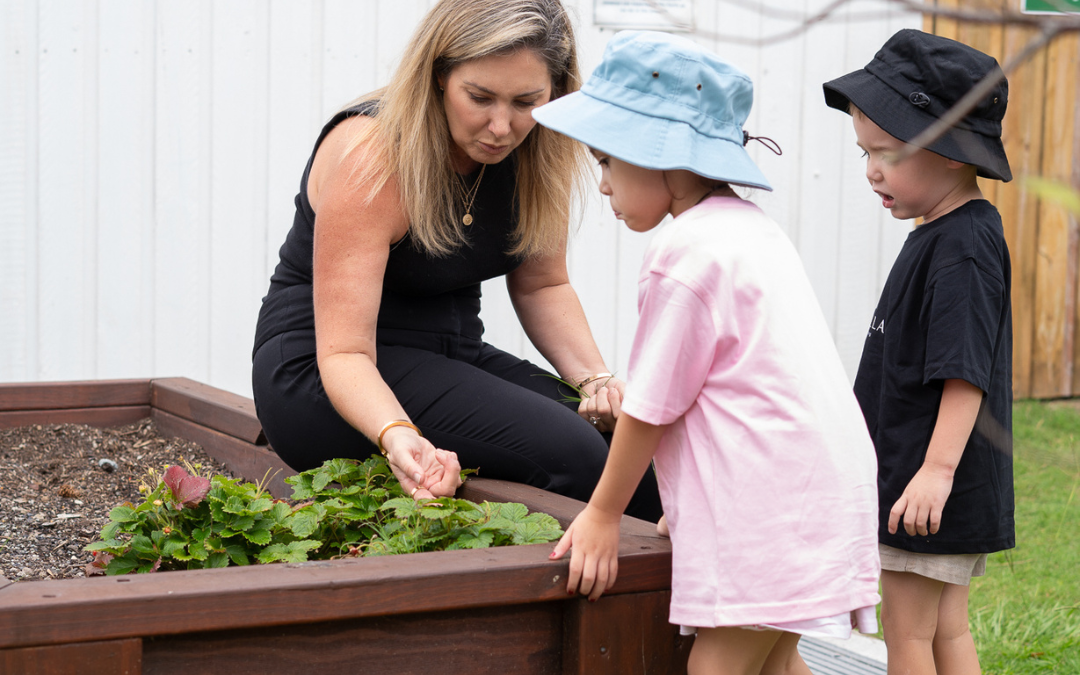
What grows in a Queensland winter garden? More than most people realise! Broccoli, kale, spinach, carrots, peas, and silverbeet are all winter crops. Our children love tending our garden beds, planting, watering (with collected water), and eventually harvesting food they helped grow. The connection between soil, seed, sun, water, and food is one of the most powerful sustainability lessons a young child can receive.
Reuse and Repurpose Challenges
In our July program, we set children the creative challenge of reimagining “waste” materials. Cardboard boxes become architecture, fabric scraps become soft toys, and egg cartons become garden seedling starters. These challenges build creativity while embedding the sustainability principle of reducing what we send to landfill.
Connecting to the Bigger Picture
At Sorella Early Learning, we are mindful of the balance between empowering children with environmental knowledge and overwhelming them with anxiety about climate challenges. Our approach is always age-appropriate, action-focused, and grounded in hope. We celebrate what we CAN do rather than dwelling on what is beyond our immediate control.
Keywords: sustainability early learning, environmental care children, Sorella Early Learning, winter gardening preschool, composting children, energy awareness early childhood, water conservation children, eco-friendly early learning, sustainability for preschoolers, environmental education Queensland
Sources and Further Reading:
– Raising Children Network – www.raisingchildren.net.au
– Australian Children’s Education & Care Quality Authority (ACECQA) – www.acecqa.gov.au
– Early Childhood Australia – www.earlychildhoodaustralia.org.au
– Sustainability Victoria – www.sustainability.vic.gov.au
– Kidspot Australia – www.kidspot.com.au
– The Early Years Learning Framework (EYLF) – www.acecqa.gov.au/eylf