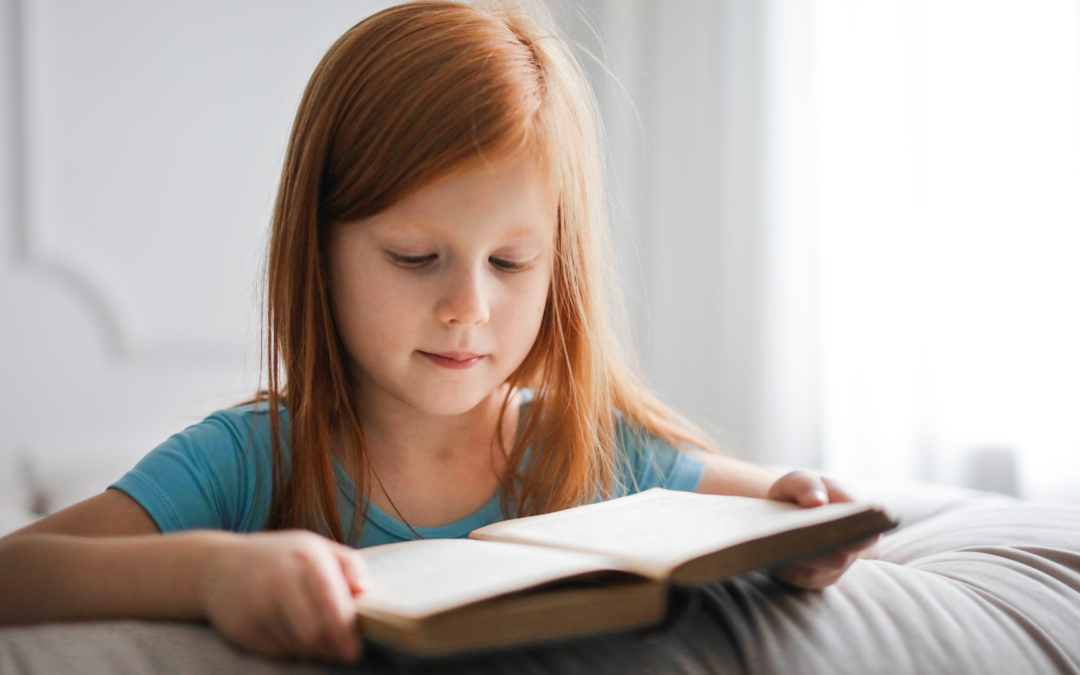
Here is a question worth sitting with: what does it actually mean to teach a 4-year-old to read?
Because if your answer involves flashcards, letter drills, and worksheets, the research — and the children — would gently disagree.
What a 4-year-old needs from literacy is not instruction. It is immersion. Not pressure. Wonder. Not performance. Play.
At Sorella Early Learning in Griffin, our Queensland Government-approved Kindergarten program is built around this understanding. We know that the most powerful foundation a child can have for a lifetime of reading and learning is not the ability to decode words at age four — it is a deep, embodied, joyful relationship with language, story, and the world of books.
Here is how we build that foundation, every single day.
Why 4 Is Such an Important Year for Literacy
The research is unequivocal: what happens in the year before formal schooling has a profound and lasting impact on a child’s reading journey. A landmark study published in the Journal of Experimental Child Psychology found that children’s scores on phonological awareness tasks at age four significantly predicted their reading and spelling outcomes six years later.
But here is what that research also tells us: the skills that predict reading success at 4 are not about reading itself. They are about sound. Rhythm. Language. Story. Vocabulary. The richness of a child’s oral world.
Phonological awareness — the ability to hear and play with the sounds in spoken language — is the single most robust predictor of early reading success. It is built through rhyming games, clapping syllables, singing, tongue twisters, nonsense words, and joyful repetition of favourite texts. It is built, in other words, through exactly the kinds of experiences that a brilliant early childhood program creates every day.
At Sorella Early Learning, our Kindy educators are guided by both the Early Years Learning Framework V2.0 (EYLF) and the Queensland Kindergarten Learning Guidelines (QKLG) 2024, which emphasise play-based learning, rich oral language experiences, and intentional literacy teaching as the cornerstones of early childhood education.
The 6 Pillars of Reading Readiness We Build at Sorella
🔊 1. Phonological Awareness: Playing With Sound
Before a child can read, they need to understand that spoken language is made up of individual sounds — and that those sounds can be separated, blended, and manipulated.
In our Kindy room, this looks like:
Rhyming games — “What rhymes with cat? bat, hat, mat, splat!” — where the sillier, the better
Syllable clapping to names, food words, and favourite animals: el-e-phant (clap, clap, clap)
Alliteration play: tongue twisters, initial sound sorting, and “I spy something starting with…”
Onset and rime: breaking words into their beginning sound and their ending family (c-at, h-at, s-at)
These activities feel like games. They are also among the most powerful literacy interventions available to early childhood educators — and our Kindy team weaves them through every part of the day, from morning circle time to outdoor play.
📖 2. Shared Book Reading: The Heart of It All
Our Sorella Seedlings community library is one of the features of our centre we are proudest of — and it is no coincidence that books sit at the very centre of our literacy program.
Australian research published in the Early Childhood Education Journal found that shared book reading between educators and four-year-old preschoolers is one of the most powerful contexts for building both oral language and emergent literacy skills. It is not just the reading that matters — it is the conversation around the reading: the questions asked, the predictions made, the words explored, the connections drawn between the story and the child’s own life.
In our Kindy room, shared book reading is never passive. Our educators:
Ask open questions that invite prediction and imagination: “What do you think will happen next?”
Draw attention to print: pointing to words, showing how we read left to right, noticing punctuation
Explore vocabulary deliberately: pausing on rich words, offering child-friendly definitions, encouraging children to use new words in context
Re-read favourite books repeatedly — because repetition is how language is absorbed at this age
Every child in our Kindy room has access to our community library. Borrowing a book to take home, sharing it with a family, and returning it to be read again by another child: this is literacy as community practice.
🔤 3. Alphabet Knowledge and Letter-Sound Connections
Knowing the names and sounds of letters — alphabet knowledge — is one of the strongest individual predictors of early reading achievement. At age 4, this is not about memorising the alphabet in order. It is about genuine, curious engagement with letters as meaningful symbols.
At Sorella, alphabet learning is embedded in everything:
Our Art Studio is where children write their names in finger paints and experiment with mark-making — early writing and letter recognition happening simultaneously through joyful sensory play
Environmental print throughout the room: children’s names on their belongings, labelled materials, words on signs that children begin to recognise as their own
Alphabet songs and movement games connecting letter sounds to physical actions — because the body remembers what the mind learns through movement
Name work — a child’s own name is their first and most motivating text. Writing it, recognising it, sounding it out
🗣️ 4. Oral Language and Vocabulary
A rich vocabulary is not just a literacy asset — it is the foundation of reading comprehension. A child who cannot understand the words they decode cannot truly read. Vocabulary is built through conversation, story, and exposure to varied, interesting language — and our Kindy program is deliberately rich in all three.
Our Music Melodies program through the Sorella Seedlings Life Skills initiative contributes meaningfully here. Singing develops phonological awareness, expands vocabulary, builds memory, and creates the emotional connection to language that makes a child want to read. A child who loves to sing is already well on the way to loving books.
Our educators are trained in sustained shared thinking — the practice of engaging in extended, back-and-forth conversations with children that deepen thinking and vocabulary simultaneously. These are not quick exchanges. They are the unhurried conversations about a caterpillar on the garden leaf, the story a child told at circle time, the question that nobody can answer and that we decide to find out together.
✏️ 5. Early Writing and Mark-Making
Writing and reading are two sides of the same coin — and children who are given regular, pleasurable opportunities to make marks, write their names, and tell their stories through drawing and writing develop stronger literacy skills overall.
At Sorella, our dedicated Art Studio is a space where mark-making, drawing, and early writing happen naturally and joyfully. Children move through a progression from scribbling to drawing to symbol-making to letter-like forms to actual letters — and every stage is celebrated as meaningful communication.
Providing children with real writing tools — clipboards, notebooks, pens, chalk on the footpath — communicates something important: your marks matter. Your words matter. Your stories are worth writing down.
🌿 6. A Love of Story, Wonder and Language
Perhaps the most important thing we do at Sorella is this: we make language something children feel deeply connected to.
Through our Nature Navigators and Bush Kindy experiences, children develop rich descriptive language about the natural world. Through our Mindful Moments program, children learn to put words to their emotions — one of the most sophisticated and underrated literacy tasks a young child can master. Through dramatic play, they retell stories, invent characters, and inhabit narratives. Through cooking in our Little Chefs program, they read recipes, follow instructions, and learn that text has purpose in the real world.
All of this, together, is what it means to teach a 4-year-old to read.
Not a worksheet in sight.
What You Can Do at Home
The most powerful literacy tool a family has is simple: talk, sing, and read together. Every day.
Ask your child about their day using open questions. Listen fully. Sing songs on the way to the centre. Borrow books from our community library and read them together at bedtime — not once, but again and again until your child knows every word by heart (which is its own remarkable early literacy milestone).
And notice the words on the cereal box at breakfast. The letters on the street sign. The writing on the shopping bag. When you point to print in the world and say “that says Stop”, you are doing exactly what our Kindy educators do — teaching your child that words are everywhere, that they mean something, and that one day, very soon, your child will be able to read them all.
Discover Our Kindergarten Program
Our Kindergarten program at Sorella Early Learning in Griffin is open to children aged 4–5 years, delivered by university-qualified Early Childhood Teachers, and includes 15 hours of Queensland Government Free Kindy.
We would love to show you our community library, our art studio, and the Kindy room where your child’s reading story begins.
📞 07 2111 6711
📍 32 Tesch Rd, Griffin QLD 4503
🌐 Book a Tour →
📸 Instagram →
High quality early learning, care and love — from our family to yours.
Sources: Journal of Experimental Child Psychology — Phonological awareness at age 4 as a predictor of reading outcomes (longitudinal research); Early Childhood Education Journal — Oral language and emergent literacy strategies in shared book reading with Australian preschoolers (Springer Nature, 2022); Queensland Curriculum and Assessment Authority (QCAA) — QKLG 2024, Active Learning (qcaa.qld.gov.au); Early Years Learning Framework V2.0 (EYLF), Australian Government Department of Education (education.gov.au); ACECQA — Play-based learning and intentionality, National Quality Standard (acecqa.gov.au); Queensland Department of Education — Effective Teaching of Reading Literature Review (education.qld.gov.au); International Literacy Association — Phonological Awareness in Early Childhood Literacy Development.